


Economia


Autoria de Donzelina A Barroso
At a recent conference hosted by Latimpacto, a network of over 600 changemakers and donors from across Latin America and the Caribbean, Fernanda de Arruda Camargo made an impassioned presentation on a panel about impact portfolios. She spoke of the tragic deforestation of Brazil, and of fires that covered 60% of her country at the time of her speech. Camargo is co-founder of Wright Capital Wealth Management, a pioneering multi-family office in Brazil that integrates impact investment services, focused on socioenvironmental transformation, into its client offerings.
Along with husband and co-founder Alexandre Lindenbojm, Camargo has been carefully coaxing wealthy families in Brazil to increase their impact investments. This is significant because collectively Wright Capital’s 45 clients control 7 billion reais, or US $ 51.28 billion
Camargo starts small, encouraging clients to become interested in, and ultimately to invest in, social or environmental impact funds:
We plan with all our clients that one percent of their wealth will be invested in socioenvironmental impact funds. Since the very beginning, we have explained that this was a new class of assets that might not generate a market return, and that in a worst-case scenario, one percent would not negatively impact the lives of those clients, but over a 10-year period, we could collectively impact millions of lives
When they started their business with this approach, Camargo worried they wouldn’t be able to support themselves, but as soon as she met the person who would become their first client, and he was “totally aligned”, she realised there was synchronicity and a desire for the type of service Wright Capital offered.
Although Camargo does not consider her work at Wright Capital to be philanthropy per se – “Our job is to manage wealth” – the sustained work of Wright Capital to help develop the field in Brazil is lighting the way for more donors and philanthropic vehicles to engage in impact investing, which is now a ubiquitous tool in the United States that is expanding in use globally. The Global Impact Investors Network’s (GIN’s) State of the Market 2024 report shows that, of foundations responding to their survey, there is sustained growth in the number of impact deals closed. From 2023 to 2024, for example, there is a 7% planned increase in the number of deals to close – from 703 to 754
Over time, as families in Camargo’s client portfolio become accustomed to impact investments – there needs to be “translation and understanding”, she saysas – they usually increase the percentage of impact investment in their overall portfolios. Today, those clients with a strong interest have up to 5% of assets in impact investing funds. The investments are not greater than that because most funds in Brazil are venture funds, which will tend not to concentrate client wealth too heavily in that asset class.
In addition, the number of intentional impact funds is limited in Brazil. Recently, however, impact credit funds have emerged that will oner additional investment opportunities.
As Camargo notes, it can be difficult for donors to consider putting impact-first ahead of return-first perspectives, and there is more work to be done: “We need a taxonomy to bring the market to this space.”
The level of experience required, the amount of careful vetting involved, and the costs, can make working in the impact investing space a challenge, particularly given the long-term time horizons of the nature and climate sectors which are the focus of the investments. Wright Capital has created funds of funds (FoF) to simplify the investment process and support development of impact investing in Brazil – the first in 2016 and a second one in 2021. It is now developing a third vehicle, which will allocate a larger portion to nature-based solutions, regenerative agriculture and agroforestry systems. “We believe that if we can pass along this knowledge to and through our client families, we can change a generation [in Brazil]. That is the dream.”
At the same time, Wright Capital is looking to future-proof the remaining 95% of client wealth. What kind of future are those resources supporting through traditional investments? Camargo and her husband became advocates for integrating environmental, social and governance (ESG) principles and climate-focused themes into investment strategies. Today, they provide mentorship to investment managers, encouraging them to have a strategy for a “new world where externalities are weighty, and several sectors might not exist in future years”.
Aside from stewarding her own and others’ financial resources toward important causes, Camargo leverages other assets, such as time and influence, to make a difference. (RPA encourages donors to think about using an ‘all-assets’ approach that goes far beyond financial resources when engaging with complex problems.) Known for hosting salons in their home, Camargo and her husband use their social capital to bring together experts, funders and stakeholders to discuss complex issues in Brazil, and how philanthropic approaches and collaboration can be used as catalytic capital to make a difference. Camargo is a prominent advocate for impact investing in Brazil, serving on 11 working groups, networks and boards and acting as a mentor. She is on the board of three Brazilian organisations dedicated to nature and well-being:
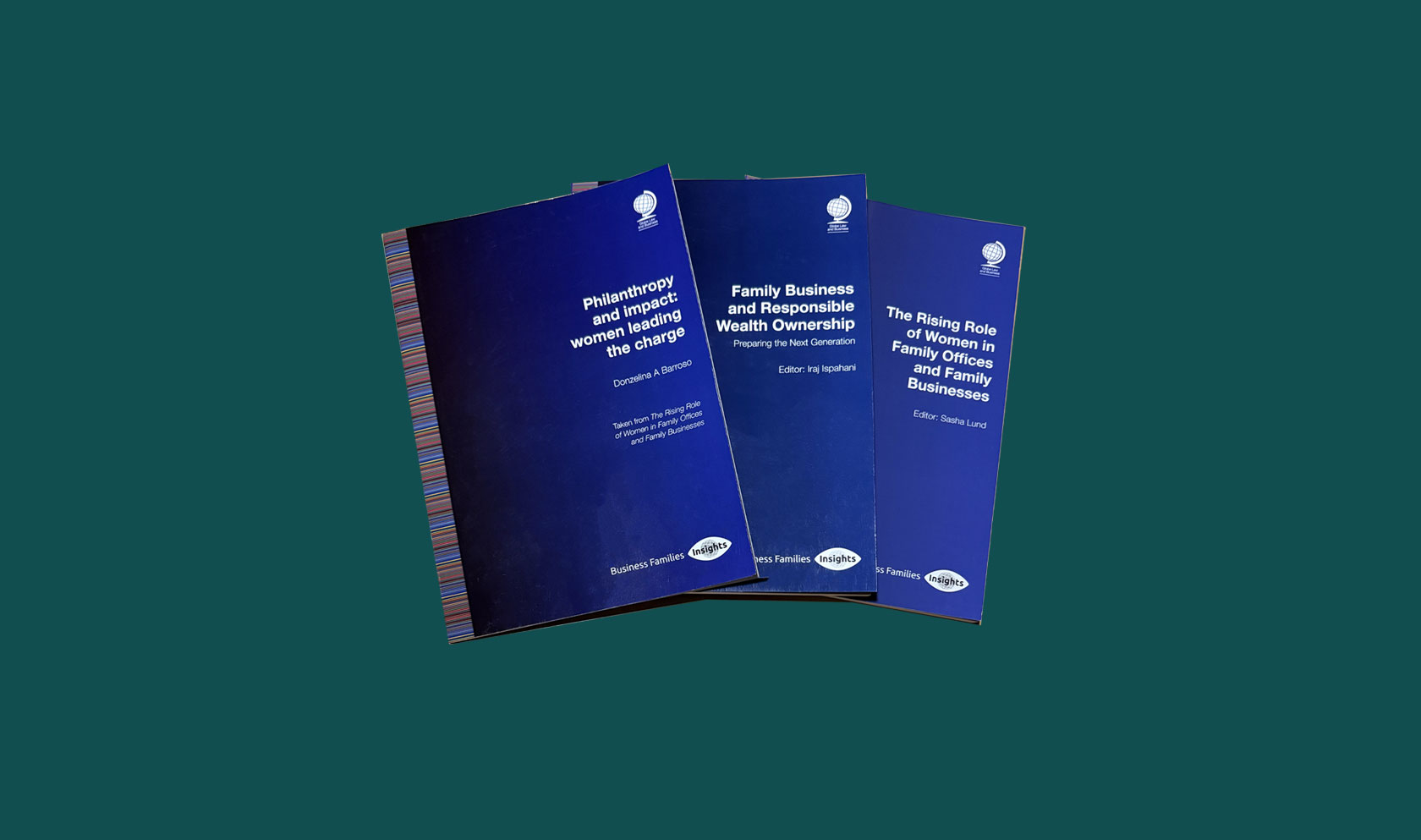
pages 137 to 140 of business families insight 2025
Textos relacionados